Strategy is no longer written
It moved out of the deck and into the work.
 Jesse Niemelä, Co-Founder
Strategy stopped being delivered and started being maintained. What gets written down is the choice you made and why. It lives next to the work it's driving. When something shifts, the choice updates. When the choice updates, the teams working from it know.
This is already how strategy runs in the organizations that are good at it. WEF and Bain put it plainly in March: leading companies treat every major decision as a dynamic bet, updated as new signals emerge.3 Not in everyone's planning rhythm yet. But not future tense either.
Across 124 organizations, only 28% of the executives and managers responsible for executing strategy could list three of their company's strategic priorities. In the company the study opens with, a third couldn't name even one.1 These organizations communicate constantly. The problem isn't reach. Every level interprets, summarizes, and passes down a thinner version. The strategy people execute is not the one the board signed off on.
A maintained strategy doesn't have that gap. There's no version passed down. The team lead and the SVP read the same choice, with the same reasoning behind it. When the choice changes, both see it at the same time. There is nothing to retransmit.
Strategy-Execution Loop

Strategic Choices
A Strategic Choice is what was decided and why. The context, the trade-offs, the reasoning. Roger Martin's test, revisited twenty-five years on: a real choice has a real alternative. If the opposite is obviously wrong, it isn't a strategy. It's an operating imperative.2
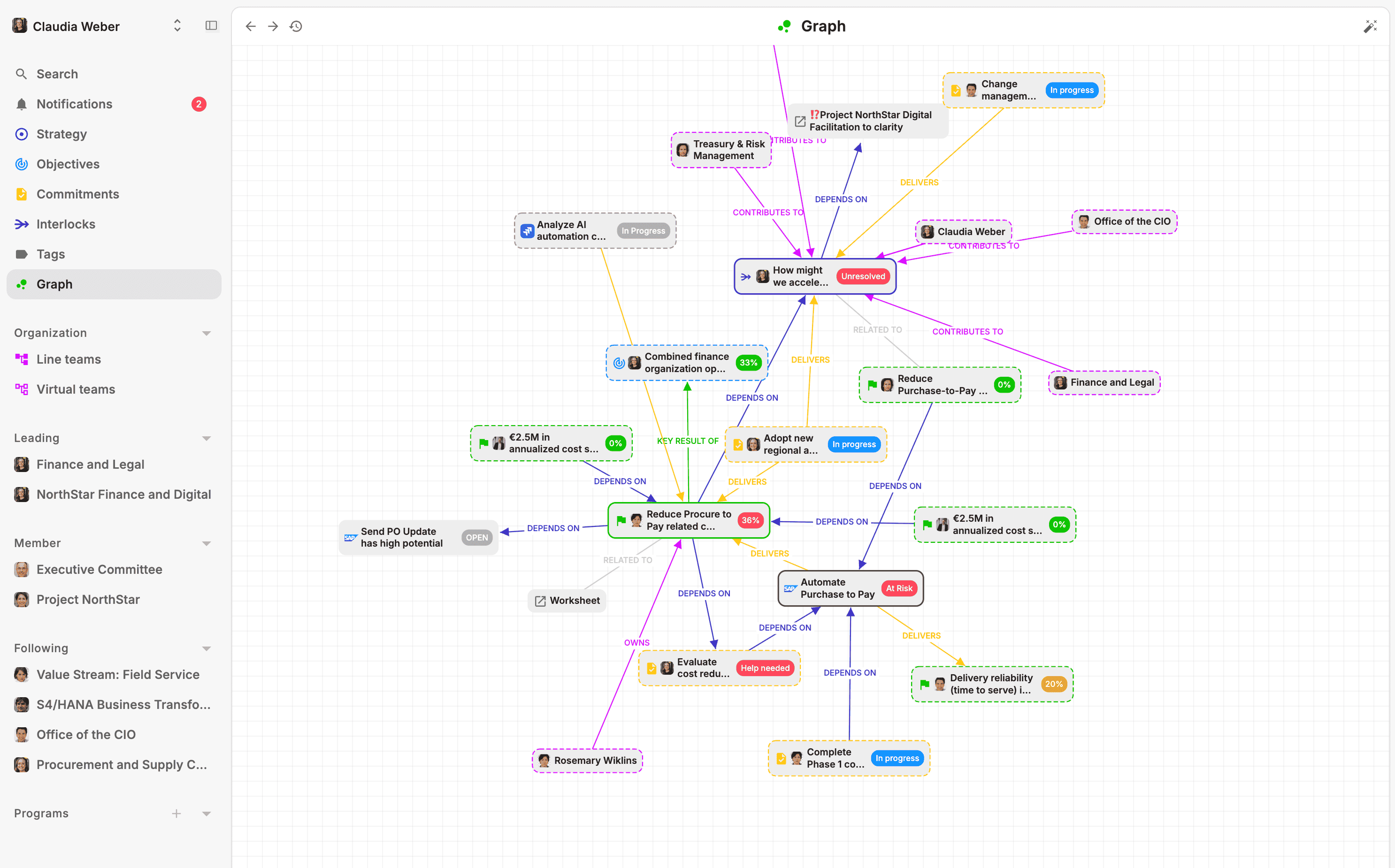
A maintained choice doesn't just describe the bet. It connects to it. The objectives delivering on it, the teams executing those objectives, and the dependencies between those teams. When something shifts, the connection is already there. You don't wait for it to surface in a quarterly review.
A choice to consolidate platforms connects to fourteen objectives across six teams in three business units. Two months in, one team's dependency on another is two weeks behind. In a deck, this surfaces when someone asks the right question at the next review. In a maintained strategy, it surfaces when it happens, and the team redirects before the delay compounds downstream.
For the person running strategy, the shift is practical. The cross-functional picture is already there, the moment teams connect their objectives to the choices driving them. Which chains are delivering, which are stalling, where dependencies are at risk. The quarterly review still happens. The questions are different. Is our strategy still right, and what should we change?
People set the direction, make the judgment calls, own the outcomes. The system holds the connections between them.
This is what we're building at Tangible Growth. If this is the problem you're solving, see the platform or book a working session.